
From Signal
to Meaning
QEEG Clinical Interpretation & Applied Brain Mapping. Learn how to translate quantitative EEG data into clinically meaningful interpretations to support assessment, case formulation, and evidence-informed therapeutic planning. With Dr. Ismael J. Castillo-Reyes.
Why most QEEG trainings fall short
Many professionals can record EEGs and generate brain maps. Far fewer know how to interpret them meaningfully.
This training is designed for those who want to move beyond colorful maps — toward clinical reasoning, network logic, and responsible clinical interpretation.
Advanced-level training
Prior experience with EEG, QEEG, or Neurofeedback is expected. This training focuses on clinical interpretation and structured reasoning — not basic recording.
This training is for you if:
- ● You already work with EEG, QEEG, or Neurofeedback
- ● You want interpretation logic — not just software outputs
- ● You seek structured clinical reasoning, not cookbook protocols
- ● You value scientific rigor and professional responsibility

Meet Dr. Ismael J. Castillo-Reyes
An integral member of the Neuro-Cognitive Research Lab at Ponce Health Sciences University, Ismael is currently involved in the pilot project "Z-Score sLORETA Neurofeedback for Stroke and TBI Rehabilitation."
Note: The training emphasizes QEEG interpretation skills applicable across clinical and research contexts. Neurofeedback is included as one relevant application area.
See what “clinically meaningful” looks like
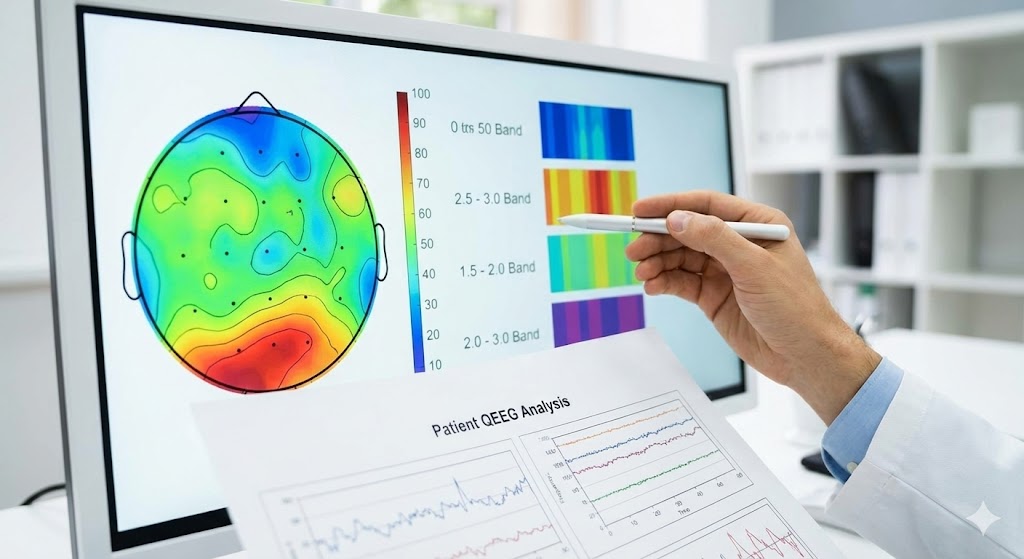
Data quality & artifact handling
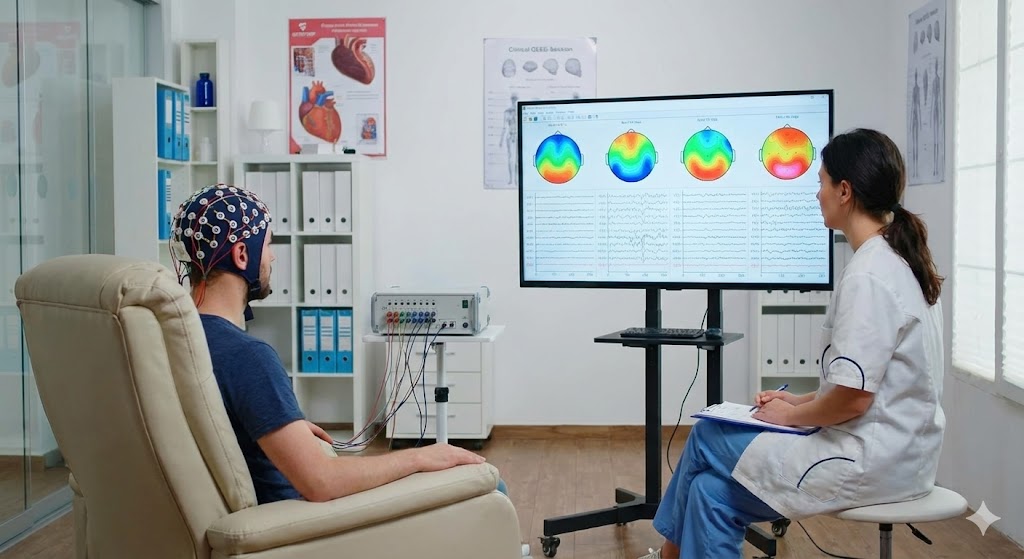
From map to interpretation
AI-Supported QEEG Interpretation
This training integrates IFEN Neuropathfinder — an educational platform designed to support structured interpretation, documentation, and evidence-informed reasoning.
Neuropathfinder is built to reinforce professional judgment — not replace it.
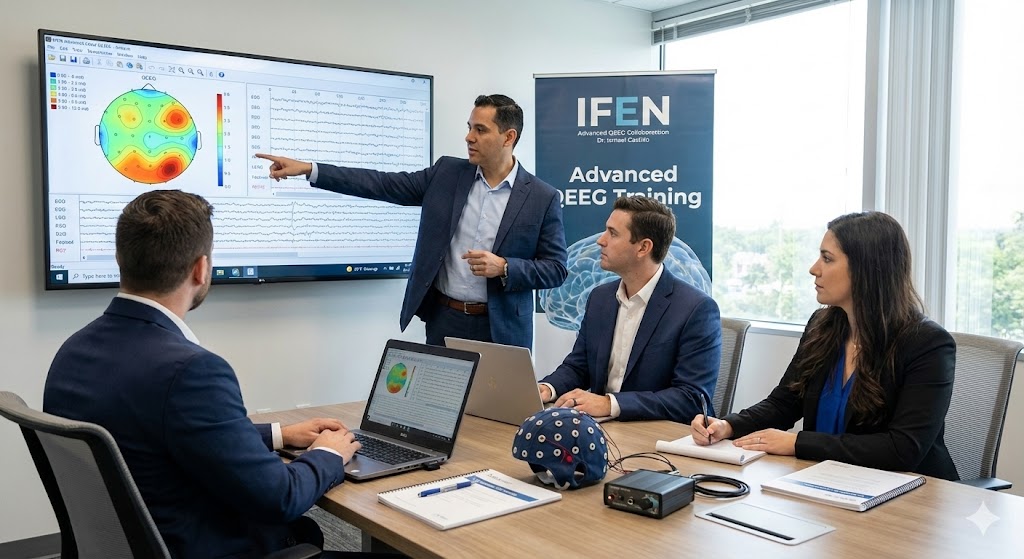
Scientific Program (4 Days)
Learn a structured workflow — from high-quality recording to interpretation and professional reporting. Neurofeedback is included as one relevant clinical application area where appropriate.
Days 1–2
Fundamentals, Quality & Interpretation
🎯 Outcome: You learn to trust your data before interpreting it — and read maps with clinical context.
- ● EEG quality and artifact management
- ● Functional meaning of brain rhythms
- ● QEEG maps, Z-scores, and connectivity metrics
- ● Montage logic and how it influences interpretation
Days 3–4
Clinical Application & Reporting
🎯 Outcome: You translate patterns into coherent clinical narratives and professional reports.
- ● Symptom-oriented interpretation and case conceptualization
- ● Medication effects and how they shape QEEG patterns
- ● Professional QEEG report writing (clear, cautious, clinically useful)
- ● Guided map review & structured reasoning (supported by Neuropathfinder)